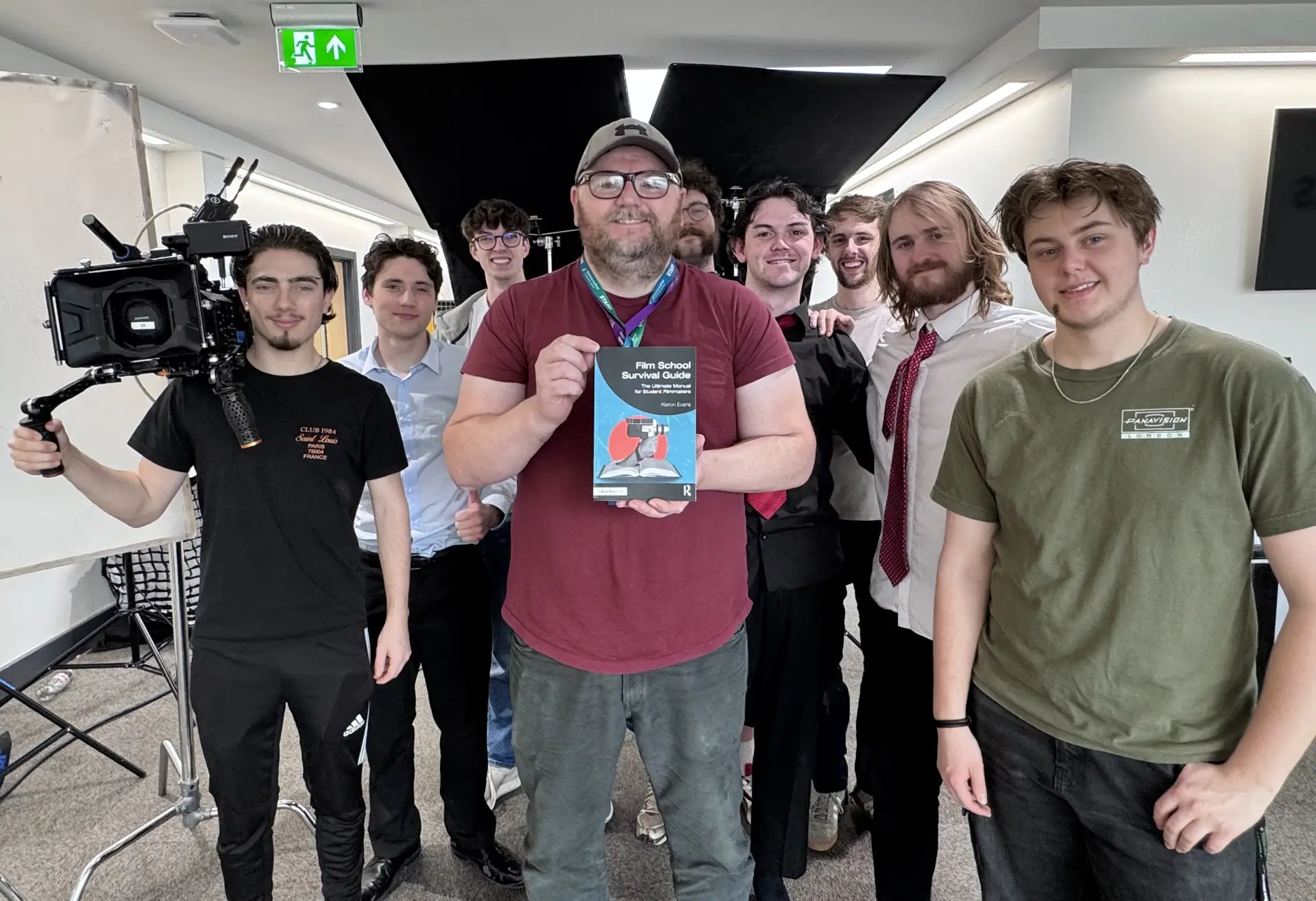
FILM lecturer Kieron Evans has used his almost 18 years of teaching experience to write a book aimed at helping young movie makers to learn their trade.
The book, Film School Survival Guide, features his tips on how to make the most of studying filmmaking, as well as the insights of former students who are now working with some of the industry’s biggest names.
Kieron, Programme Leader in Film Production and Cinematography at Salisbury campus, said the book came about by chance.
From classroom to published author
“I was asked to write a review of a book by a publisher and they asked if I had any ideas for a book of my own,” he said. “I’d never really thought about it before but I’ve seen students through the process of making more films that most people, we worked out that I’ve seen well over 1,000 student films.
“So during that time I’ve seen patterns emerge and thought I could write a book that not just points out the mistakes that students make or the clichés they fall into, but helps them understand why and what to do instead.”
The book takes would-be filmmakers through the whole experience of learning to make movies, from getting on to a course to what to expect and how to behave, as well as the technical pitfalls and how to avoid them.
The former students who have contributed insights include Pete Hills, an editor who has worked on commercials for Nike, Bethany Spence a greens supervisor who created vegetation and forests for Jurassic World, Anna Watson, who was a location manager on Killing Eve, Adam Sander a trainee grip on Gladiator 2 and A Quiet Place Day One, and Katherine Zollman, a camera operator on The Apprentice, Ru Paul’s Drag Race and Britain’s Got Talent.
“There’s a lot of misinformation out there about filmmaking but the credibility of what they’ve worked on is going to interest students,” he said. “I think that was something that the publishers found particularly appealing as well.”
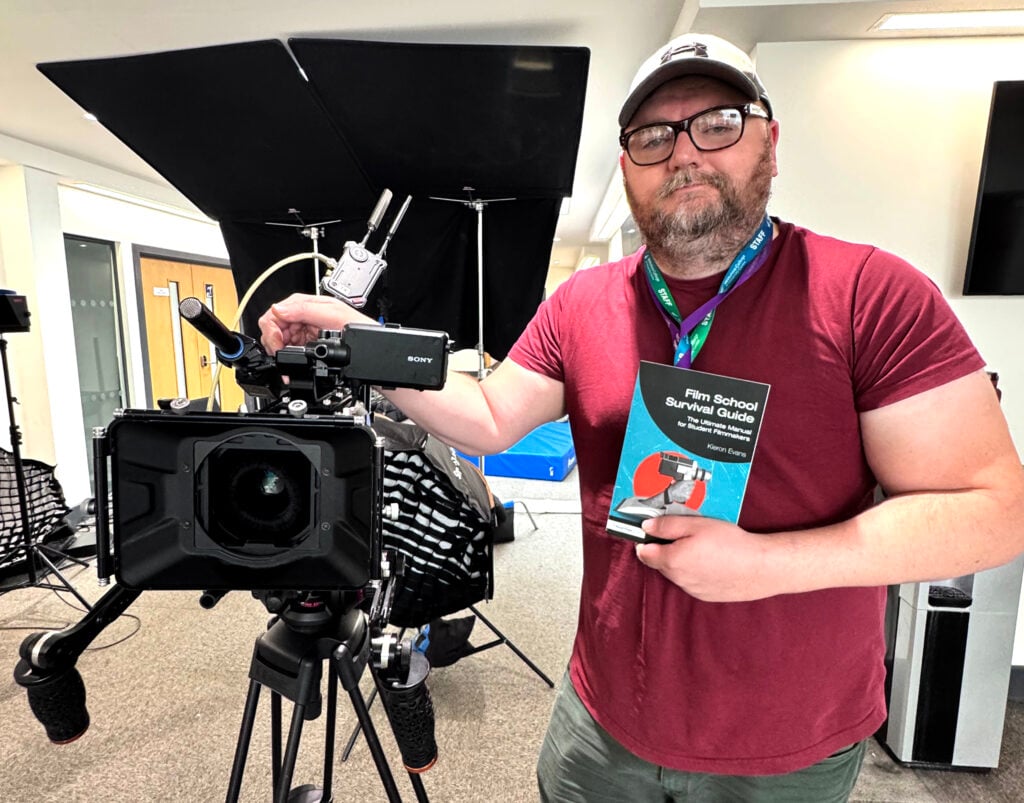
Practical advice for aspiring filmmakers
He spent a year writing the 70,000 word manuscript, mostly by hand. “My way of doing it, and this is something I recommend to students in the book, was to take a notepad and pen and find somewhere nice to sit and have thoughts and then scribble them down,” he said.
“One of my favourite places to go was the Beach House Hotel at Milford-on-Sea. I’d sit on the promenade overlooking the Isle of White Needles, have a cup of coffee and just scribble away.”
He found he had so much experience to share he struggled to fit it all in. “There was quite a bit of editing and I didn’t get to write nearly as much as what I wanted to,” he said. “But I’m going to create an Instagram channel for the book and post things regularly on there.”
Included among the book’s six sections is behaviour on the course, dealing with tough feedback, setting standards, preparing for shooting, filming and editing techniques and reflecting on work.
“The book is about getting students to make better use of their time on their course, but it is just as applicable to people who are making a film in their bedroom or their back garden,” said Kieron.
He said it was a strange feeling holding the published book in his hands for the first time. “I had a bit of imposter syndrome at first because I couldn’t believe that all these insights I’ve only ever shared with a room full of 18 to 21 year olds are now out there, and that was a bit scary,” he said.
“But I’m quite proud of the book because it was something I thought I’d never do. A lot of authors go to publishers and pitch things multiple times and never get their books published, so this is great.”
Film School Survival Guide, published by Routledge, is available online and at book shops.
Start your journey in film
Discover Film Production and Cinematography and develop the skills to succeed in the screen industries. Apply now or visit us at an open event.