TOMORROW (Saturday) is the 82nd anniversary of D-Day – the day that changed the course of the Second World War when Allied forces invaded the beaches of Normandy to launch Operation Overlord.
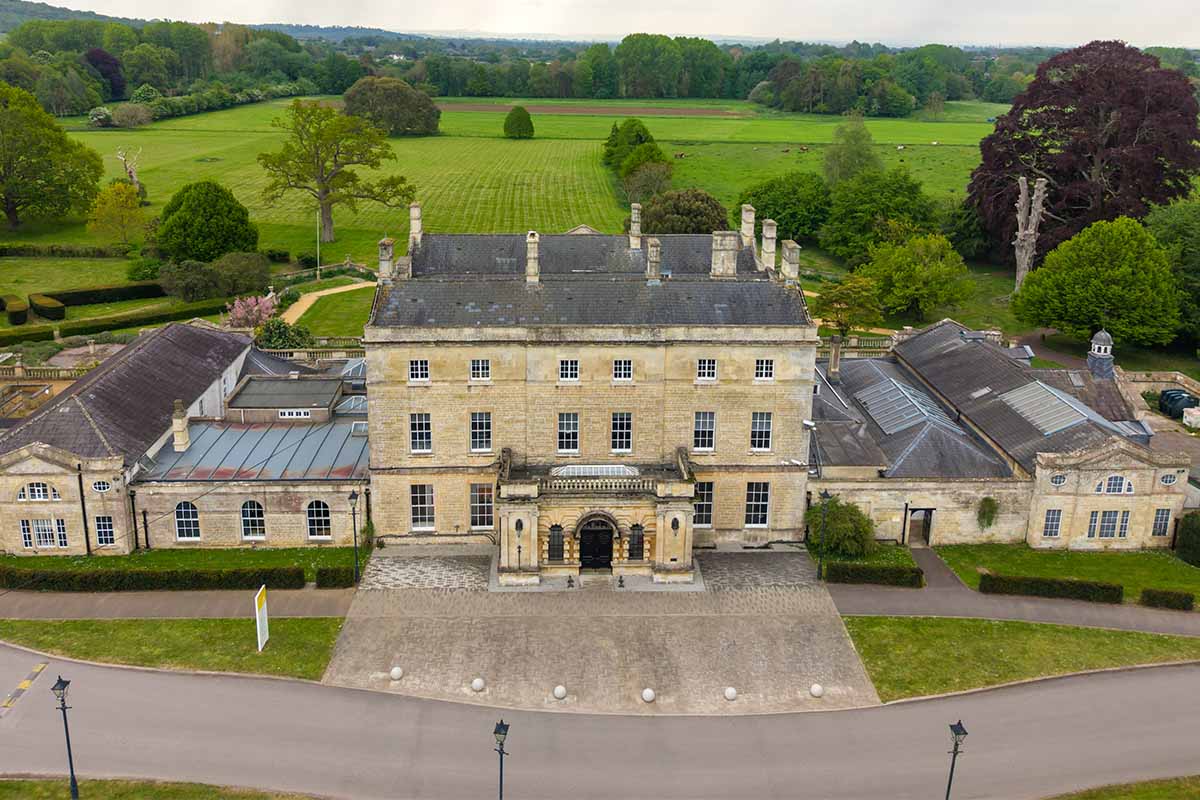
Everyone knows it was the largest seaborne invasion in history and took two years of planning – but what is less well known is the fact that some of that planning took place at Lackham House, now the Wiltshire Business School at Wiltshire College & University Centre’s Lackham campus.
Lackham became a base for the 10th Armoured Infantry Battalion of the 4th Armoured Division of the 3rd US Army, commanded by General George S Patton, when it was posted to Britain to begin planning and training for the invasion of France.
Patton and his troops were to lead the drive across France to relieve the D-Day invasion forces as they pushed back the German defences and went on into Germany to end the war. But before all that, Patton and his GIs made their home at Lackham.
Patton and his staff occupied the first floor rooms on the southern side of Lackham House, which overlook the terraces and the fields. The men were stationed all around the grounds.
They first arrived on the estate, which before the war had been devoted to farming, in the darkness of the wartime blackout, recalled a veteran GI who visited Lackham in 2001. He said when they arrived they were surprised at how small the house was – only to discover the next morning they had passed the main house in the dark and had only seen the stable yard buildings.
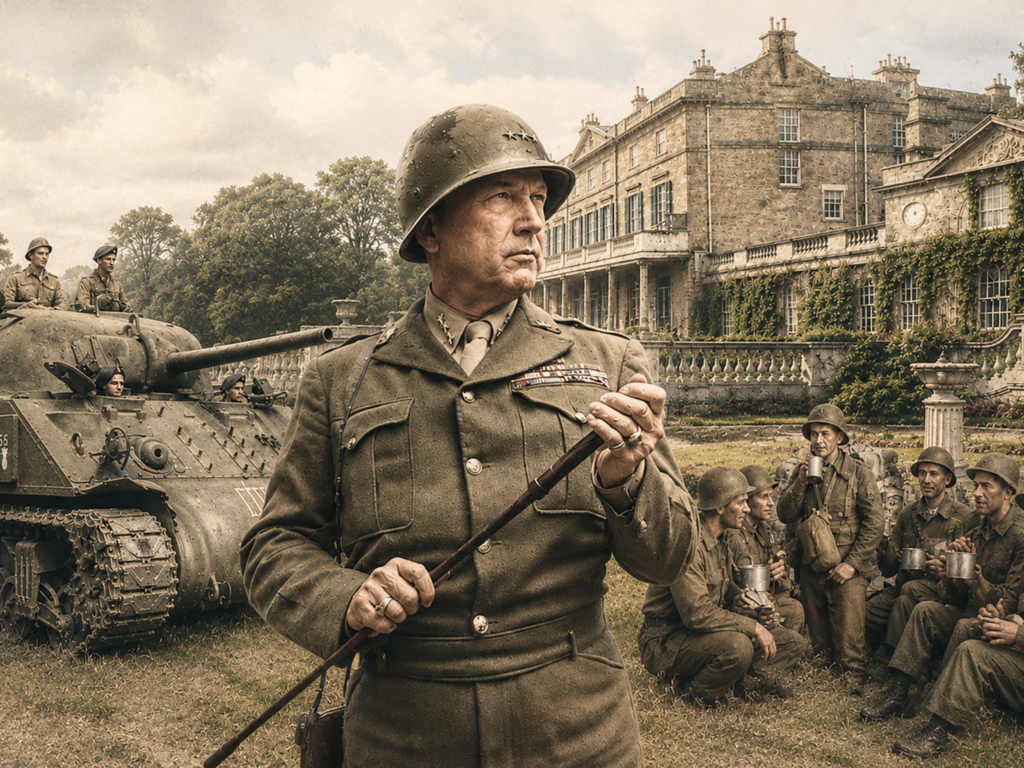
During their training the men made an impact on the local community while visiting shops pubs in Lacock and Chippenham and met members of the Women’s Royal Air Force, known as WRAFs, at dances on the estate.
Lacock resident Nancie Howie recalled in 1996: “Soldiers stationed at Lackham House who came to the village for a glass or two (or more) of beer, often missed the brook path and blundered through the brook and up the old Nethercote Hill and on to Lackham. Grandfather found many a soldier’s hat floating in the brook, past the garden and heading for the river. Especially when the Americans arrived.”
The presence of so many men at the house and surrounding area was the source of much local gossip and stories abounded of what went on there. It is rumoured a Sherman tank damaged the garden wall and the original entrance pillars by the front lodge were later replaced because of another accident.
There was even a story that Patton ordered soldiers to use dynamite to blow a crater in the grounds for a swimming pool. Lecturer and unofficial Lackham historian Tony Pratt says this is not true.
“All of the ponds and tanks that are visible today appear on the OS maps and estate sale maps back to at least 1850,” he says. “There was a swimming pool on the estate but it was built after the war.”
Another tale that could be true is that General Dwight Eisenhower, the Supreme Commander of the Allied Forces, visited Lackham House as part of the D-Day planning. In wartime any sensitive news, particularly regarding something as secret as D-Day, was supressed, so although his visit may only have been gossip, it could well have been true.
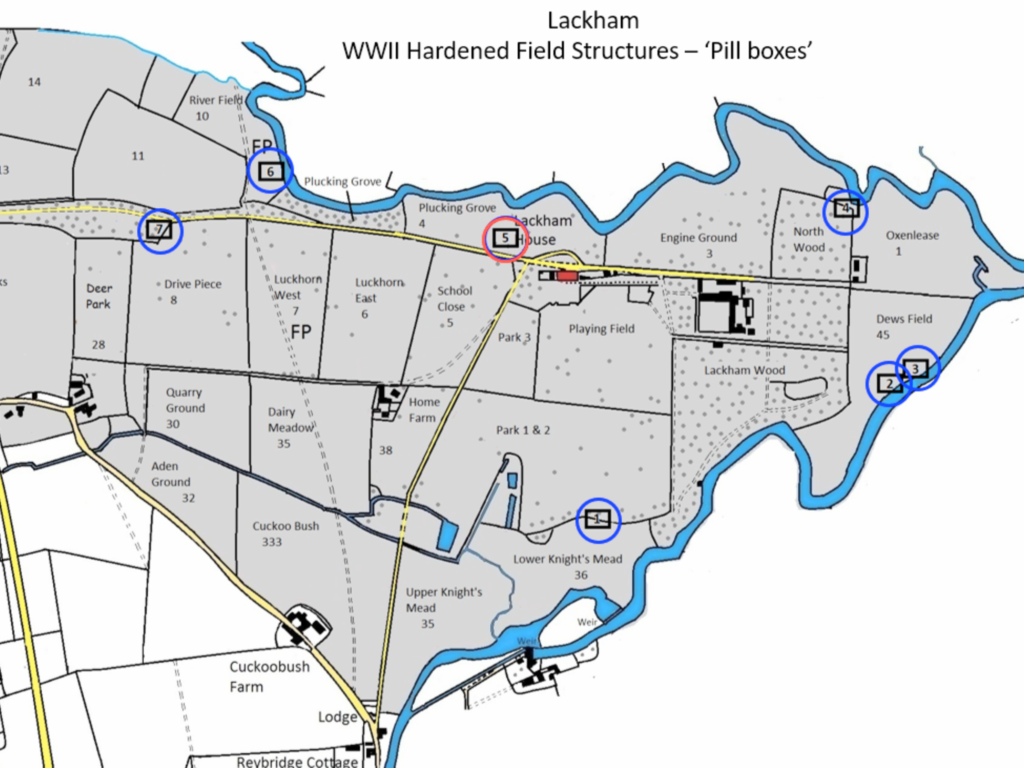
There are few traces of the GIs’ time at Lackham remaining today. A wooden storage structure built by the Americans was still being used in the 1990s and six of seven ‘pill boxes’ – reinforced concrete gun emplacements – are still to be found but one, One, at the junction of the Front and Back Drives, was removed in the mid 1960s.
After the troops departed for their date with destiny on June 6, 1944, the link with D-Day continued as the house was used as a rest and recuperation centre for wounded soldiers.
Eventually the sounds of marching drills, shooting practice and barked commands faded, to be returned to agriculture. The tank tracks on the grass were lost in the fresh growth and overgrown paths were restored as peace returned.
It is sobering to think that those two years of training at Lackham were the last of so many lives of the men who came to Wiltshire from across the Atlantic in the cause of freedom.
Research by Tony Pratt.