A Leader in Adult Care has responsibility for managing community or residential based services, they may be responsible for business development, financial control, organisational resilience and continuity, managing risk and leading on organisational change. This role has a large element of leadership, whether with other care workers and networks or in leading the service itself. They may be a registered manager of a service, unit, deputy or assistant manager and may work in residential or nursing homes, domiciliary care, community day centres, a person’s own home or some clinical healthcare settings.
Home > Leader in Adult Care (Level 5)

Health and Social Care
Leader in Adult Care (Level 5)
Apprenticeship
Health and Social Care
Flexible
Study Mode
Apprenticeship
Start Date, Location
Flexible, Flexible
Duration
2 years
Cost
£.00
per academic year.



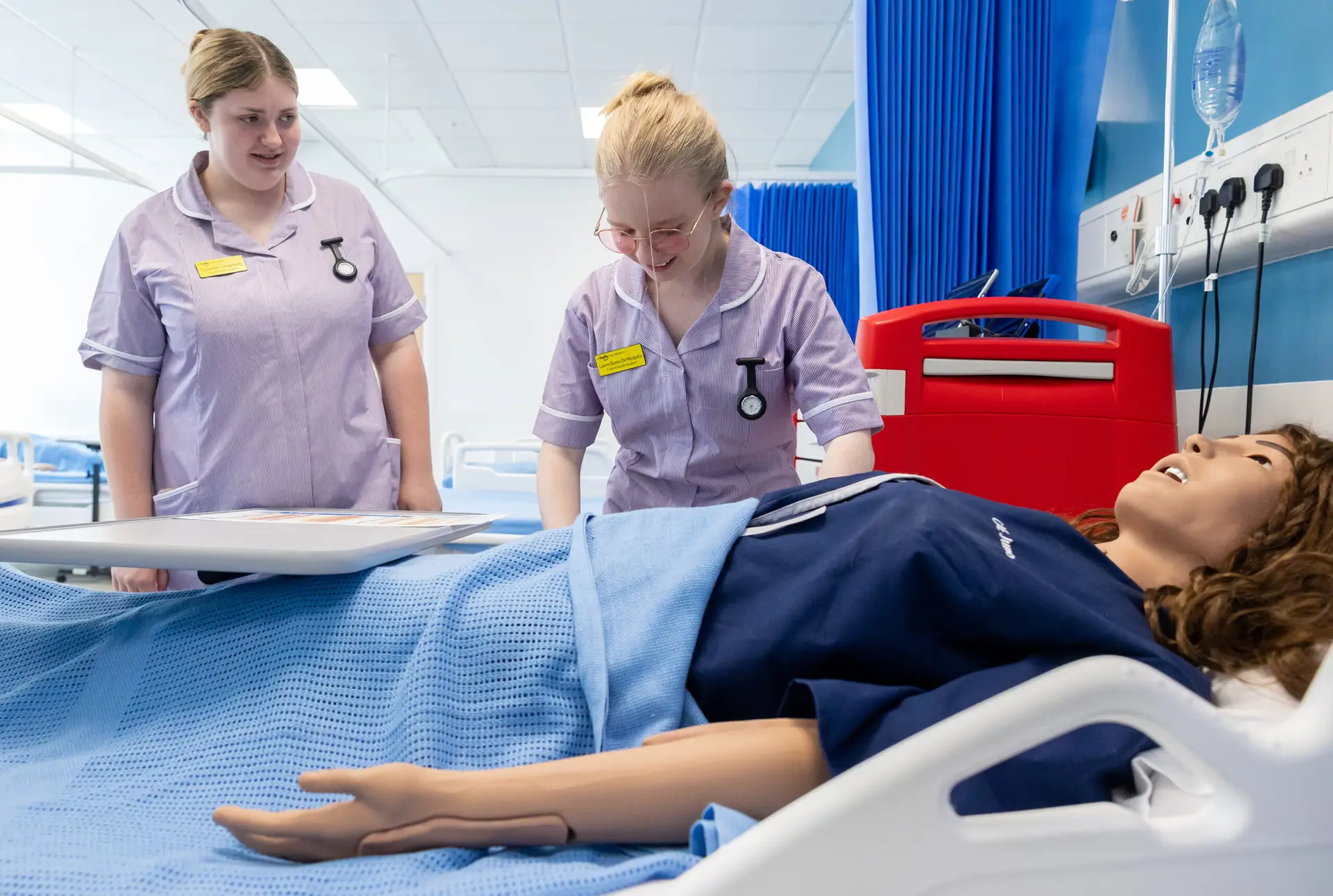
View our facilities & work
Course Overview
More information
What will I learn?
This apprenticeship is made up of the Level 5 Diploma in Leading and Managing an Adult Care Service and the Level 5 Leader in Adult Care Apprenticeship Standard.
It is made up of Knowledge, Skills and Behaviours. These are assessed at the end of the Apprenticeship in an End Point Assessment and cover topics such as:
• Dignity and human rights
• Communication
• Safeguarding
• Health and wellbeing
• Professional development
• Leadership
Within the Level 5 Diploma in Leading and Managing an Adult Care setting learners must achieve 95 credits from mandatory units and optional units. Your assessor will support you with choosing your optional units.
It is made up of Knowledge, Skills and Behaviours. These are assessed at the end of the Apprenticeship in an End Point Assessment and cover topics such as:
• Dignity and human rights
• Communication
• Safeguarding
• Health and wellbeing
• Professional development
• Leadership
Within the Level 5 Diploma in Leading and Managing an Adult Care setting learners must achieve 95 credits from mandatory units and optional units. Your assessor will support you with choosing your optional units.
Entry Requirements
Before enrolment all applicants will have an informal interview where we will outline the commitment, engagement and study requirements of the apprenticeship, and the resources and support available from the college. Applicants will have the opportunity to discuss their learning needs and to ask any questions.
At Level 5 this is a higher-level apprenticeship. A strong level of written English is essential as learners will need to understand complex information, produce written work that goes beyond description which may need to include analysis, evaluation and critical discussion. Good writing skills also support effective workplace communication, such as reports, emails, and reflective accounts, which are key at this level. A GCSE grade C/4 or Functional Skills Level 2 or equivalent in English is an entry requirement for this apprenticeship. If you do not have a formal qualification in English, don’t worry, please reach out to us to complete an English assessment.
If an employer has agreed to support you on this apprenticeship, please contact the Apprenticeship team. Email apprenticeships@wiltshire.ac.uk
At Level 5 this is a higher-level apprenticeship. A strong level of written English is essential as learners will need to understand complex information, produce written work that goes beyond description which may need to include analysis, evaluation and critical discussion. Good writing skills also support effective workplace communication, such as reports, emails, and reflective accounts, which are key at this level. A GCSE grade C/4 or Functional Skills Level 2 or equivalent in English is an entry requirement for this apprenticeship. If you do not have a formal qualification in English, don’t worry, please reach out to us to complete an English assessment.
If an employer has agreed to support you on this apprenticeship, please contact the Apprenticeship team. Email apprenticeships@wiltshire.ac.uk
Study, Assessment and Qualifications
The Level 5 Leader in Adult Care Apprenticeship is not a taught course there is no college attendance required. You will be assigned an assessor who will provide you with resources and support to complete each unit through a range of assessments.
Apprentices will be assessed and prepared for the Apprenticeship End Point Assessment by their assessor through a range of methods, including written assignments, direct observation in the workplace, professional discussions and the preparation of a portfolio of evidence which will be used in the End Point Assessment. This is the final assessment an apprentice undertakes to complete their apprenticeship and is carried out by an independent assessor.
Apprentices must record a minimum of 440 hours of learning and development, this is called ‘Off the Job Training’, which must take place during your paid working hours. This can include work shadowing, training, workshops, online learning, mentoring, time for assignment writing or revision. In fact, any learning and development that supports learning on the apprenticeship can be recorded.
Apprentices will be assessed and prepared for the Apprenticeship End Point Assessment by their assessor through a range of methods, including written assignments, direct observation in the workplace, professional discussions and the preparation of a portfolio of evidence which will be used in the End Point Assessment. This is the final assessment an apprentice undertakes to complete their apprenticeship and is carried out by an independent assessor.
Apprentices must record a minimum of 440 hours of learning and development, this is called ‘Off the Job Training’, which must take place during your paid working hours. This can include work shadowing, training, workshops, online learning, mentoring, time for assignment writing or revision. In fact, any learning and development that supports learning on the apprenticeship can be recorded.
Additional Costs and Information
Learners will use an e-portfolio for the duration of their course. Access to a lap-top, computer or other device with Internet, camera and audio is required. Learners will not be able to complete this course on a phone or small tablet due to the different types of assessments that must be completed.
If you do not have a suitable Internet connected device and you are based in Wiltshire your employer may be able to apply for a loan of one from Wiltshire Digital Drive www.wiltshiredigitaldrive.org
There is no required textbook for this course, your assessor will provide you with many resources, but you will also need to carry out your own research for written assignments. Our Learning Resource Centres have a range of books and resources to support this course.
If you do not have a suitable Internet connected device and you are based in Wiltshire your employer may be able to apply for a loan of one from Wiltshire Digital Drive www.wiltshiredigitaldrive.org
There is no required textbook for this course, your assessor will provide you with many resources, but you will also need to carry out your own research for written assignments. Our Learning Resource Centres have a range of books and resources to support this course.
Ready to apply?
Careers
Other upcoming events

Trowbridge open event: November 2026
07 November 2026
10:00
30 November -0001
0:00
30 November -0001
0:00
30 November -0001
0:00
Lackham open event: November 2026
14 November 2026
10:00
30 November -0001
0:00
30 November -0001
0:00
30 November -0001
0:00

Chippenham open event: November 2026
14 November 2026
10:00
30 November -0001
0:00
30 November -0001
0:00
30 November -0001
0:00

Castle Combe open event: November 2026
14 November 2026
12:00
30 November -0001
0:00
30 November -0001
0:00
30 November -0001
0:00

Salisbury open event: November 2026
21 November 2026
10:00
30 November -0001
0:00
30 November -0001
0:00
30 November -0001
0:00

Higher Education virtual open event
02 December 2026
17:00
30 November -0001
0:00
30 November -0001
0:00
30 November -0001
0:00

Trowbridge open event: January 2027
27 January 2027
17:00
30 November -0001
0:00
30 November -0001
0:00
30 November -0001
0:00
Lackham open event: January 2027
30 January 2027
10:00
30 November -0001
0:00
30 November -0001
0:00
30 November -0001
0:00

Chippenham open event: February 2027
02 February 2027
17:00
30 November -0001
0:00
30 November -0001
0:00
30 November -0001
0:00
Salisbury open event: February 2027
04 February 2027
17:00
30 November -0001
0:00
30 November -0001
0:00
30 November -0001
0:00