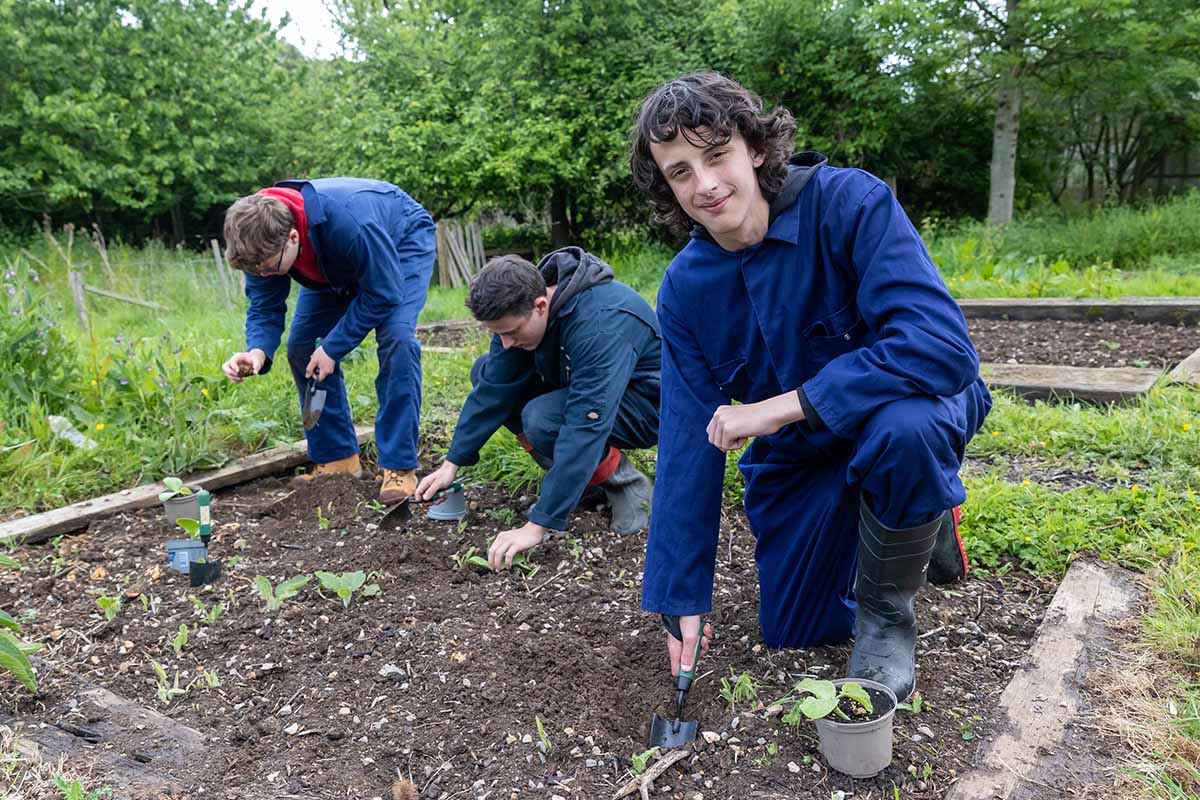
Countryside workers conserve and maintain the English countryside, including National Parks, AONBs, National Nature Reserves, and private estates. They perform environmental and conservation tasks, ensuring practical work aligns with farming and recreational activities. Typical roles include Estate Worker, Ranger, and Site Warden. They work outdoors in various locations, interact with the public, and operate year-round in all weather conditions, both independently and as part of a team. Their duties are essential for preserving and enhancing rural landscapes.
Home > Countryside Worker Apprenticeship (Level 2)

Countryside
Countryside Worker Apprenticeship (Level 2)
Apprenticeship
Countryside
Lackham
Study Mode
Apprenticeship
Start Date, Location
October 2026, Lackham
Duration
14 months
Cost
£.00
per academic year.


View our facilities & work
Course Overview
More information
What will I learn?
A range of knowledge, skills and behaviours are required from learners to prepare for your End Point Assessment (EPA) to complete this apprenticeship which include:
• Boundary and Access Maintenance: Building and repairing fences, walls, hedges, and public rights of way to support livestock control, landscape features, and safe access for
all users.
•Habitat and Woodland Management: Enhancing habitats through planting, pruning, felling, and controlling invasive species.
• Surveying and Monitoring: Conducting surveys to support informed habitat management.
•Conservation and Ecology: Applying ecological principles in managing habitats, boundaries, and their interaction with farming.
•Core Practical Skills: Habitat management, tool use, problemsolving, risk assessment, species ID, and clear communication.
• Boundary and Access Maintenance: Building and repairing fences, walls, hedges, and public rights of way to support livestock control, landscape features, and safe access for
all users.
•Habitat and Woodland Management: Enhancing habitats through planting, pruning, felling, and controlling invasive species.
• Surveying and Monitoring: Conducting surveys to support informed habitat management.
•Conservation and Ecology: Applying ecological principles in managing habitats, boundaries, and their interaction with farming.
•Core Practical Skills: Habitat management, tool use, problemsolving, risk assessment, species ID, and clear communication.
Entry Requirements
Apprentices who do not hold Maths & English L1 or GSCE grades 2 (E) will need to complete these prior to completion of the apprenticeship programme (Gateway).
You must have secured a position with an employer and be ready to start working with them before you can begin your apprenticeship course.
If you already have an employer and they have agreed to put you through an apprenticeship, contact the Apprenticeship team and we’ll get you started. Email apprenticeships@wiltshire.ac.uk.
You must have secured a position with an employer and be ready to start working with them before you can begin your apprenticeship course.
If you already have an employer and they have agreed to put you through an apprenticeship, contact the Apprenticeship team and we’ll get you started. Email apprenticeships@wiltshire.ac.uk.
Study, Assessment and Qualifications
The Countryside Worker Apprenticeship programme is delivered one day a week at our Lackham campus during term time only and in the workplace with a visit from your Assessor every 10 to 12 weeks.
As part of the apprenticeship programme, you’ll need to record a minimum of 6 hours per week ‘off-the-job’ training time. This can include work shadowing, training, workshops, online learning, tutor sessions, revision, webinars, industry visits – anything that supports your learning on the apprenticeship and supported by your dedicated assessor.
This programme is assessed by a number of practical assessments, including observations and professional discussions in the workplace, to generate evidence for your portfolio in preparation for EPA. In addition, a tutor will arrange college lessons covering both theory and practical learning as required throughout the programme.
As part of the apprenticeship programme, you’ll need to record a minimum of 6 hours per week ‘off-the-job’ training time. This can include work shadowing, training, workshops, online learning, tutor sessions, revision, webinars, industry visits – anything that supports your learning on the apprenticeship and supported by your dedicated assessor.
This programme is assessed by a number of practical assessments, including observations and professional discussions in the workplace, to generate evidence for your portfolio in preparation for EPA. In addition, a tutor will arrange college lessons covering both theory and practical learning as required throughout the programme.
Additional Costs and Information
This apprenticeship lasts 14 months plus 3 months for the End Point Assessment (EPA).
Ready to apply?
Careers
Other upcoming events
Lackham open event: November 2026
14 November 2026
10:00
30 November -0001
0:00
30 November -0001
0:00
30 November -0001
0:00
Lackham open event: January 2027
30 January 2027
10:00
30 November -0001
0:00
30 November -0001
0:00
30 November -0001
0:00

Trowbridge open event: November 2026
07 November 2026
10:00
30 November -0001
0:00
30 November -0001
0:00
30 November -0001
0:00

Chippenham open event: November 2026
14 November 2026
10:00
30 November -0001
0:00
30 November -0001
0:00
30 November -0001
0:00

Castle Combe open event: November 2026
14 November 2026
12:00
30 November -0001
0:00
30 November -0001
0:00
30 November -0001
0:00

Salisbury open event: November 2026
21 November 2026
10:00
30 November -0001
0:00
30 November -0001
0:00
30 November -0001
0:00

Higher Education virtual open event
02 December 2026
17:00
30 November -0001
0:00
30 November -0001
0:00
30 November -0001
0:00

Trowbridge open event: January 2027
27 January 2027
17:00
30 November -0001
0:00
30 November -0001
0:00
30 November -0001
0:00

Chippenham open event: February 2027
02 February 2027
17:00
30 November -0001
0:00
30 November -0001
0:00
30 November -0001
0:00

Salisbury open event: February 2027
04 February 2027
17:00
30 November -0001
0:00
30 November -0001
0:00
30 November -0001
0:00