If you’re working as a practitioner in a children’s home. residential special school or a secure children’s home this course is designed for you. The children might be living on their own or in a larger group. You will take the lead in developing and delivering children’s placement plan and will work with each child to support their health, education, social and day to day needs, playing a significant role in helping them to thrive, fulfil their potential and stay safe. You will demonstrate a passion to care for and about children, young people and families. You will be skilled in recognising and assessing the complex needs that children, young people and families often present. At the end of the apprenticeship the high quality of your practice will be making a real difference to those that you work with.
Home > Children, Young People and Families Practitioner Apprenticeship (Level 4)

Children, Young People and Families Practitioner Apprenticeship (Level 4)
Study Mode
Apprenticeship
Start Date, Location
Flexible, Flexible
Duration
2 years
Cost
£.00



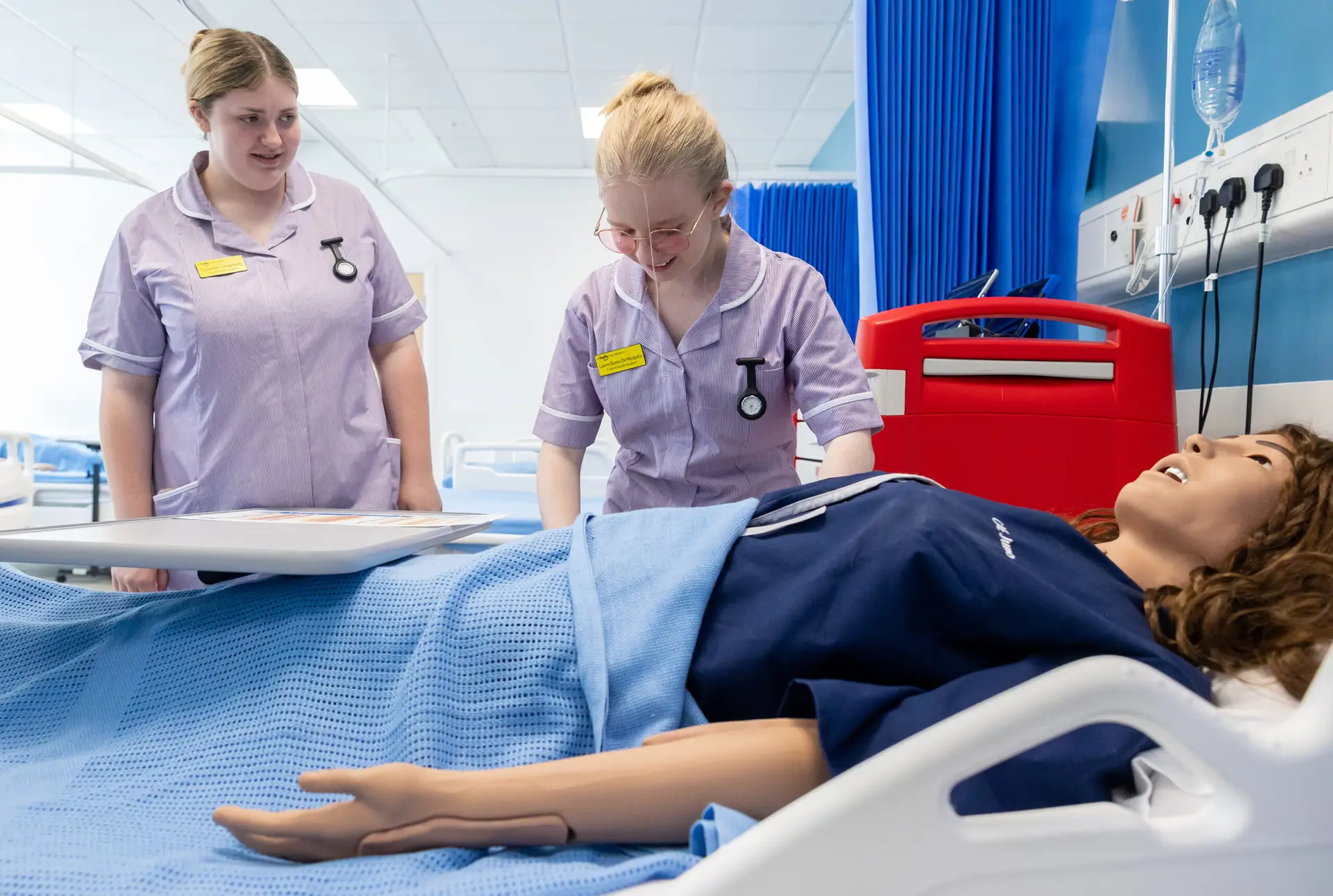
View our facilities & work
Course Overview
More information
What will I learn?
The Level 4 Children. Young People and Families Practitioner Apprenticeship Standard is made of Knowledge, Skills and Behaviours. These are assessed at the end of the Apprenticeship in an End Point Assessment and cover mandatory topics such as:
• Respecting and valuing children and young people to keep them safe.
• Being affirming and working with children and young people to help them make a positive difference to their lives
• Communication that enables the voice of the child, young person or family to be heard
• Understanding the multiple factors that contribute to uncertainty in the lives of children, young people and families.
• Ensuring equality, rights, diversity and cultural differences are valued and supported.
• Understanding and acting on safeguarding risk factors in line with local and national requirements
• Promoting the development of skills for children, young people and families to successfully manage risk for themselves.
• Understanding child, adolescent and adult development, including the spectrum of needs and how they can be met.
• Identifying and managing evidence-based approaches and interventions
• Theories and guidelines underpinning your duties, responsibilities, boundaries and ethical nature of your job
• The role of professional judgement and analysis in complex situations
• Systems and policy frameworks such as education, health, care, employment, criminal justice, special educational needs and disabilities.
Within the Level 3 Diploma for Residential Childcare learners must achieve 53 credits from the mandatory units and a minimum of 8 credits from at least 3 optional units. Your assessor will support you with choosing your optional units. Some optional units are knowledge only and can be completed with a written assignment, others have some written elements as well as skills that must be observed by your assessor. If you choose an optional unit with skills as part of it, you must be able to demonstrate these when observed.
There is no college attendance for this apprenticeship.
Entry Requirements
At Level 4 this is a higher-level apprenticeship. A strong level of written English is essential as learners will need to understand complex information and produce written work that goes beyond description, you may need to include analysis, evaluation and critical discussion in your work. A GCSE grade C/4 or Functional Skills Level 2 or equivalent in English is an entry requirement for this apprenticeship. If you do not have a formal qualification in English, don’t worry, please reach out to us to complete an English assessment with us.
You must be over the age of 19 years and have passed your probationary period before you can begin this apprenticeship.
If your employer has agreed to support you on this apprenticeship, contact the Apprenticeship team and we’ll get you started. Email apprenticeships@wiltshire.ac.uk
Study, Assessment and Qualifications
Apprentices will be assessed and prepared for the Apprenticeship End Point Assessment by their assessor through a range of methods, including written assignments, direct observation in the workplace, professional discussions, creative tasks and the preparation of a portfolio of evidence which will be used in the End Point Assessment. This is the final assessment an apprentice undertakes to complete their apprenticeship and is carried out by an independent assessor..
Apprentices must record a minimum of 490 hours of learning and development, this is called ‘Off the Job Training’, which must take place during your paid working hours. This can include work shadowing, training, workshops, online learning, mentoring, time for assignment writing or revision. In fact, any learning and development that supports learning on the apprenticeship can be recorded.
Additional Costs and Information
If you do not have a suitable Internet connected device and you are based in Wiltshire, your employer may be able to apply for a loan of one from Wiltshire Digital Drive www.wiltshiredigitaldrive.org
There is no required textbook for this course, your assessor will provide you with many resources, but you will also need to carry out your own research for written assignments. Our Learning Resource Centres have a range of books and resources to support this course.
Ready to apply?
Careers
Other upcoming events

Trowbridge open event: November 2026
10:00
0:00
0:00
0:00
Lackham open event: November 2026
10:00
0:00
0:00
0:00

Chippenham open event: November 2026
10:00
0:00
0:00
0:00

Castle Combe open event: November 2026
12:00
0:00
0:00
0:00

Salisbury open event: November 2026
10:00
0:00
0:00
0:00

Higher Education virtual open event
17:00
0:00
0:00
0:00

Trowbridge open event: January 2027
17:00
0:00
0:00
0:00

Lackham open event: January 2027
10:00
0:00
0:00
0:00

Chippenham open event: February 2027
17:00
0:00
0:00
0:00
Salisbury open event: February 2027
17:00
0:00
0:00
0:00